This page was first published in December 2021, while North Carolina counties and cities were signing on to the national opioid settlements. For current funding rules, eligible strategies, and step-by-step help, use the Opioid Settlement Navigator.
Check your county’s projected payments on the NC payment schedule
Steps for local governments to participate in the settlements
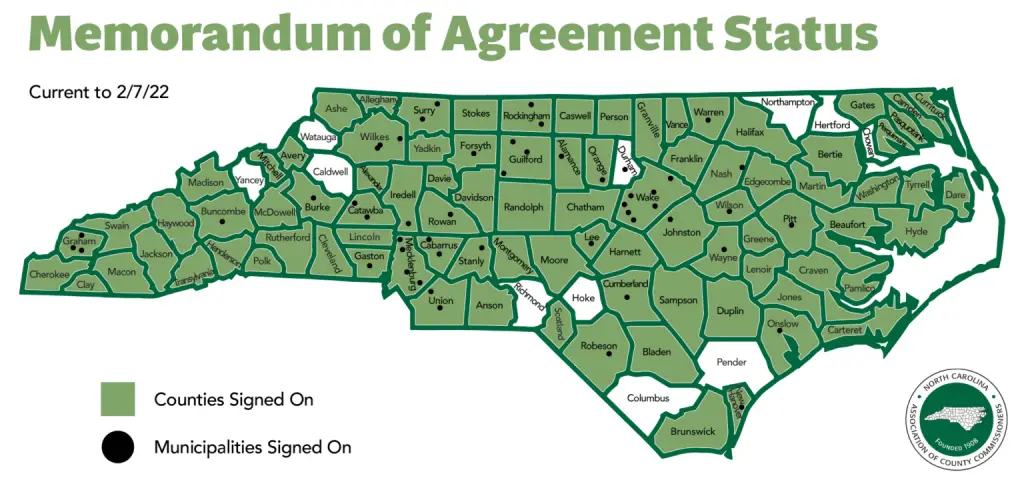
Source: NC Association of County Commissioners
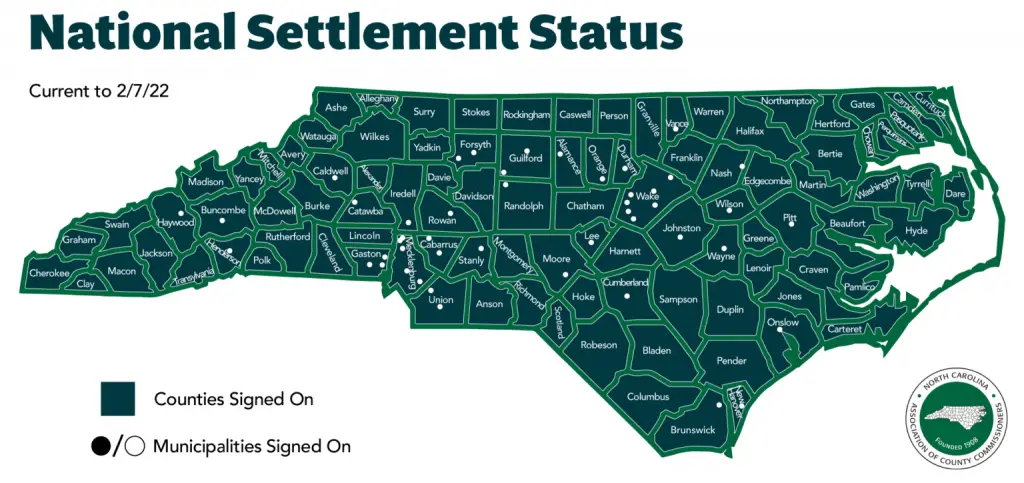
Source: NC Association of County Commissioners
Source links and information
- NC Opioid Settlements (CORE-NC), the official state portal
- NC Association of County Commissioners: opioid settlements assistance
- How local governments participate in the settlements
Settlement related pages
- Steps for Local Governments to Participate in the Settlements
- The Participation Agreements for Distributor and Janssen Settlement Agreements
- Verify Registration Code
Documents
The documents first posted here in 2021 have been superseded. These are the current official versions.